
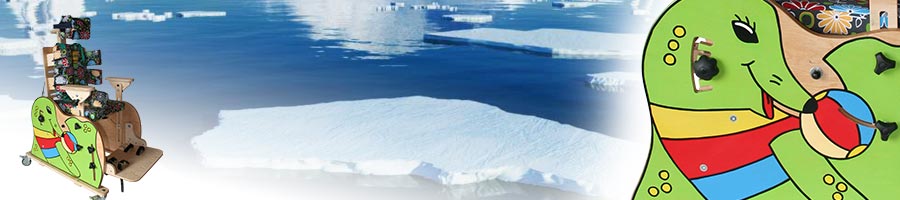

Fotelik rehabilitacyjny "FOKA"
Fotelik rehabilitacyjny "FOKA" jest niezastąpiony przy wstępnej pionizacji. Dzięki prostej budowie jest łatwy w obsłudze, a jednocześnie doskonale spełnia swoją funkcję. Bezpiecznie mogą go używać dzieci bardzo wiotkie o zmniejszonym napięciu mięśniowym jak i dzieci spastyczne. Fotelik może również bardzo ułatwić rehabilitacje w schorzeniach ortopedycznych. Dzięki regulacji pelot bocznych uzyskujemy pomoc w korygowaniu wady postawy. Oddajemy w Państwa ręce Fotelik "FOKA", który jest urządzeniem niezwykle przydatnym w rehabilitacji dzieci niepełnosprawnych w warunkach domowych, szpitalnych, ośrodkach rehabilitacyjnych, a prawidłowo wykorzystany może przyczynić się do znacznej poprawy życia dzieci, ułatwić zabawę i edukację.
Pełna specyfikacja produktu
Pełna specyfikacja produktu
Pełna specyfikacja produktu
Pełna specyfikacja produktu
Wyposażenie standardowe fotelika FOKA:
- stelaż z kołami jezdnymi wyposażonymi w hamulce
- poduszka oparcia pleców
- peloty boczne podtrzymujące klatkę piersiową i biodra
- poduszka siedziska

| Rozmiar 1 | Rozmiar 2 | Rozmiar 3 | |
| A. Szerokosć bioder w cm | 15-22 | 17-28 | 27-38 |
| B. Szerokość klatki piersiowe | 15-22 | 17-28 | 27-38 |
| C. Wysokość od stóp do pachy w cm | 48-72 | 58-88 | 68-98 |
| D. Długość stopki w cm (maksymalna) | 17 | 20 | 24 |
| E. Odległość od pleców do łydki w cm | 11-23 | 19-35 | 24-43 |
| Waga użytkownika (maksymalna) w kg | 25 | 45 | 60 |
| Rozmiar 1 | Rozmiar 2 | Rozmiar 3 | |
| Wymiary urządzenia w cm [dł x szer x wys] | 80x60x65 | 86x65x75 | 92x66x80 |
| Masa urządzenia w kg | 25 | 30 | 35 |
Zastosowanie
Fotelik „MIŚ" można stosować w następujących jednostkach chorobowych:
- Mózgowe porażenie dziecięce
- Tetrapareza (niedowład czterokończynowy)
- Teraplegia (porażenie czterokończynowe)
- Paraplegia (porażenie kończyn dolnych)
- Parapareza (niedowład kończyn dolnych)
- Urazy wielonarządowe
- Zaawansowane choroby demielinizacyjne
- Przepuklina oponowo-rdzeniowa
- Stany po urazach kręgosłupa - odcinka lędźwiowego, piersiowego, szyjnego
Badania kliniczne prowadzone z fotelikami potwierdzają wskazania stosowania tych urządzeń w leczeniu i zapobieganiu wielu schorzeń, a w szczególności:
- Poprawy czynności układu sercowo- naczyniowego
- Zapobieganiu i leczeniu zastojów żylnych
- Poprawy wentylacji płuc i zapobieganiu zapalenia płuc
- Zapobieganiu zatorom tętnicy płucnej
- Zapobieganiu i leczeniu osteoporozy
- Zapobieganiu i leczeniu zastojów w układzie moczowym
- Poprawy perystaltyki j elit
- Pomocy w reedukacji pęcherza neurogennego
- Poprawy stanu psychicznego
- Zapobieganie zanikom mięśni
- Zapobieganiu i leczeniu przykurczów, poprawy ruchomości stawów
Galeria
| Zdjęcie | Opis |
 |
PELOTY BOCZNE WSPIERAJĄCE KLATKĘ PIERSIOWĄ I BIODRA Regulowane peloty boczne wspierają klatkę piersiową i biodra, a jednocześnie pomagają korygować wady postawy. GŁĘBOKOŚĆ SIEDZENIA Regulacja głębokości siedziska w zależności od potrzeb dziecka. |
 |
REGULACJA ZAGŁÓWKA Regulowany zagłówek daje możliwość ustawienia wysokości oraz szerokości, jest możliwość dodania również pasa podtrzymujący głowę, co podnosi komfort dziecka. |
 |
KLIN MIĘDZY UDOWY Klin między udowy jest elementem, który w razie potrzeby możemy łatwo zdemontować. |
 |
REGULACJA PODNÓŻKÓW Możliwa jest regulacja podnóżków w zależności od potrzeb dziecka. Fotelik posiada również paski stabilizujące stopy. PRZEMIESZCZANIE Fotelik posiada zestawy kołowe z hamulcem zapadkowym oraz skrętnymi kołami dzięki czemu możliwe jest przewiezienie dziecka do innego pomieszczenia. |
 |
STOLIK Możliwa jest regulacja wysokości stolika oraz jego kąt nachylenia co podnosi komfort pacjenta korzystającego z fotelika "FOKA". |
 |
KAMIZELKA ZABEZPIECZAJĄCA Kamizelka zabezpieczająca posiada paski, których długość jest regulowana. |


|
Wyposażenie ponadstandardowe: Wyposażenie ponadstandardowe dodajemy gratis. Promocja ważna do wyczerpania stanów magazynowych. |


| |